
BLOG
Why Fence Construction and Ground Conditions Matter for Properties Across Toowoomba and the Lockyer Valley
A fence may look simple above ground, but much of its stability depends on what is happening below the surface. For properties across Toowoomba and the Lockyer Valley, ground levels, drainage, slopes, disturbed soil and changes in moisture can all affect how a fence performs.
These factors become particularly noticeable on longer fence lines. Conditions can change substantially from one end of a property to the other, especially across acreage, sloping blocks and land that has previously been filled or excavated.
Understanding the site before construction helps identify where additional attention may be needed rather than assuming every post can be installed under identical conditions.
Fence Posts Depend on Stable Ground
Posts transfer wind loads, gate movement and the weight of fencing components into the ground. If the ground around a post cannot hold it securely, the fence can begin moving regardless of how straight it looked when first installed.
Soft ground is one obvious concern, but disturbed soil can also create problems. Areas that have previously been excavated and filled may behave differently from undisturbed ground nearby.
Moisture adds another variable. Soil conditions can change between prolonged dry periods and periods of regular rainfall. Ground that feels hard when dry may behave differently after becoming saturated.
These changes help explain why a fence can remain straight in one section while nearby posts begin leaning. The problem may not be the visible fence panel at all. Movement can originate around the posts and gradually affect rails, panels, gates and other connected components.
Sloping Blocks Need More Than a Straight Fence Line
Changes in elevation are common across properties in and around Toowoomba, particularly where residential development meets sloping or semi-rural land.
A fence crossing a slope needs to follow the ground in a controlled way. Depending on the fencing system and site, this can involve following the slope or stepping sections at planned points.
Ignoring the levels can create large openings beneath sections of fencing, inconsistent panel heights or awkward transitions between neighbouring sections.
Sloping ground also changes how water travels across a property. Rainwater naturally follows lower areas, and concentrated runoff can wash soil away from posts or keep sections of the fence line wetter than surrounding ground.
Retaining walls add another consideration. Toowoomba Regional Council treats retaining walls separately from ordinary fences and sets specific approval requirements in certain circumstances. Approval can be required where retained fill exceeds 1 metre above natural ground, where a wall sits within 1.5 metres of another retaining wall or building, or where loads such as a driveway or building sit above it.
A fence positioned above a retaining wall can also trigger additional requirements when their combined height exceeds particular limits.
Drainage Problems Can Become Fencing Problems
Water around a fence line deserves attention before posts are installed.
Low areas may collect water after heavy rain, while slopes can direct runoff towards particular sections. Poor drainage can contribute to soil movement or erosion around posts. For timber components, persistent moisture can also increase deterioration where unsuitable conditions keep the material wet.
Existing drainage paths should therefore be identified rather than unintentionally blocked or redirected.
The same principle applies where fencing sits near retaining walls. Retaining structures hold back earth and can experience additional pressure where water accumulates behind them. A fence installed above or near a retaining wall needs to be considered alongside the wall rather than treated as an unrelated structure.
Property owners should also avoid assuming that an existing retaining wall automatically forms part of a dividing fence. Under Queensland law, a retaining wall is not defined as a fence, and responsibility for retaining walls differs from responsibility for dividing fences.
Existing Fence Movement Can Reveal Ground Issues
A leaning fence is sometimes repaired by replacing the visibly damaged section, but the underlying cause should also be considered.
Look along the complete fence line rather than inspecting one panel. Posts leaning in the same direction, gaps opening between components or a gate gradually falling out of alignment can indicate movement within the fence structure.
The surrounding ground can provide further clues. Soil washing away from a post, depressions where water collects, exposed post footings or noticeable changes in ground level deserve attention.
Gate problems can be particularly useful indicators. Gates place different loads on supporting posts because their weight extends away from the hinge point. If a gate that previously operated correctly begins dragging, dropping or failing to line up with its latch, movement around the supporting post may be contributing to the problem.
Simply adjusting the gate may not address the cause if the post itself is moving.
Boundary Conditions Should Be Checked Before Construction
Ground conditions are not the only site factor that matters. The actual position of the property boundary should also be clear.
Toowoomba Regional Council advises that where a fence is proposed on a boundary and current survey pegs are unavailable, a professional land surveyor may need to establish the property boundary. Queensland Government guidance similarly recommends a registered cadastral surveyor where owners need to determine whether a fence follows the common boundary.
This becomes particularly relevant on larger properties where an old fence may have stood for many years without anyone checking its exact alignment.
Queensland dividing fence laws also distinguish between a fence on the common boundary and a fence constructed entirely on one owner's land. A dividing fence on the common boundary is generally owned equally by adjoining neighbours.
Checking the boundary, ground levels, drainage and existing structures before construction provides a clearer picture of the actual fencing conditions. Across Toowoomba and the Lockyer Valley, those details can matter just as much as the fencing material visible above the ground.


DISCOVER WHAT OUR CUSTOMERS HAVE TO SAY ABOUT US
REVIEWS
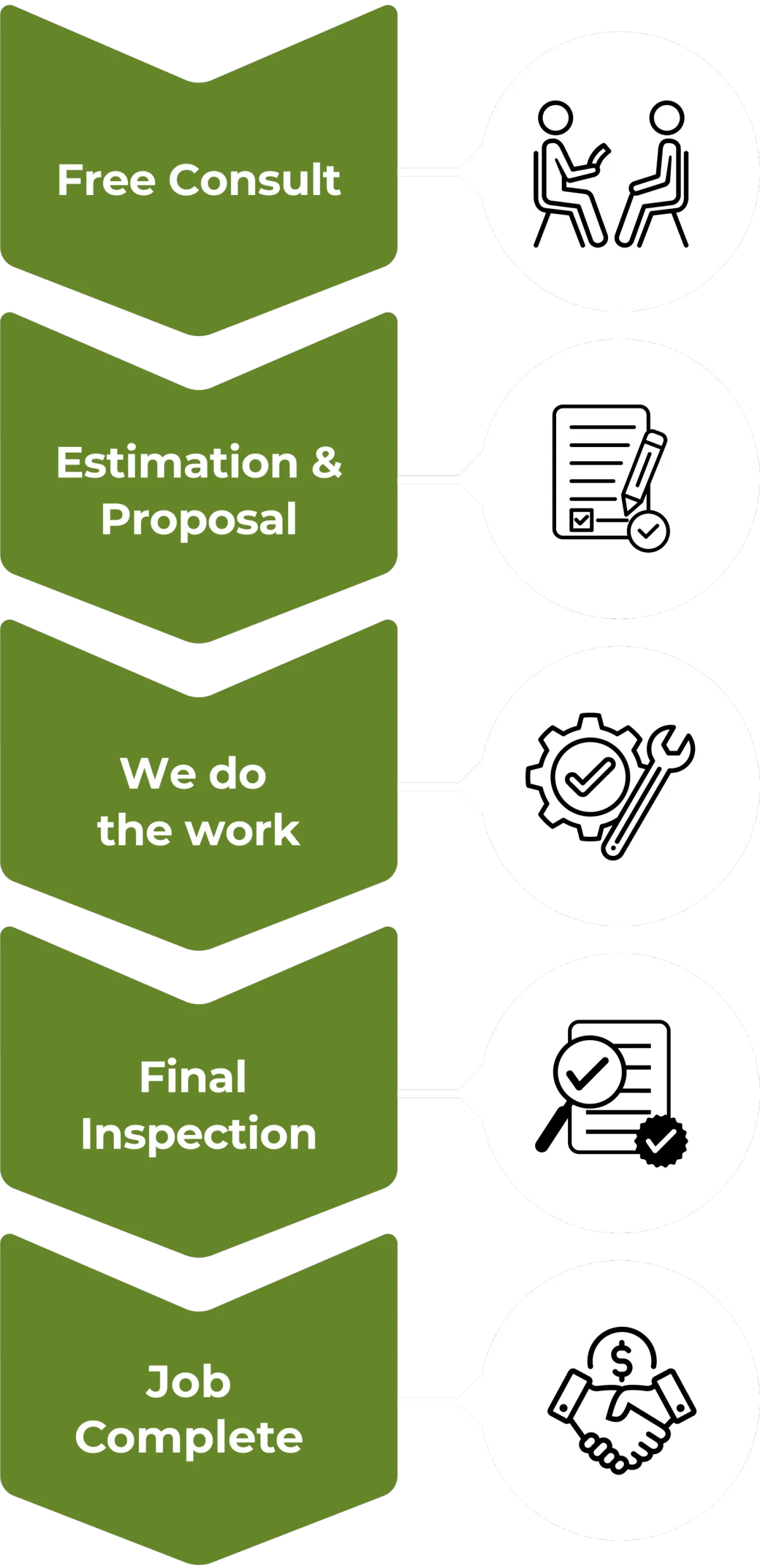
our process
Our process is simple and only contains a few simple steps

SERVICE AREAS
proudly serving Toowoomba
Toowoomba
Withcott
Helidon
Gatton
Highfields
Meringandan
Hampton
Lockyer Valley
Esk
Plainland

frequently asked questions
Find clear answers to the questions we’re asked most often.
How does the repair process work?
Once you contact Appliance Repair Solutions, a technician will discuss the issue with you and arrange a suitable inspection time. The problem is diagnosed on site, and clear advice is provided before any repair work begins. The goal is to complete repairs efficiently while keeping communication straightforward throughout the process.
How quickly can I book a technician?
Service availability depends on your location and the type of appliance issue. In many cases, same day or next day bookings may be available across Sydney. The team aims to respond promptly and provide flexible scheduling where possible.
Do you provide quotes before starting repairs?
Yes. After assessing the appliance and identifying the fault, you will receive clear information about the recommended repair and expected costs. This helps customers make informed decisions before approving any work.
What should I do before the technician arrives?
It helps to clear access around the appliance and make note of any error codes or unusual behaviour. If possible, have the appliance model number available as this can assist with diagnosing the issue faster. The technician will guide you through anything else needed when confirming the booking.
What should I do before the technician arrives?
It helps to clear access around the appliance and make note of any error codes or unusual behaviour. If possible, have the appliance model number available as this can assist with diagnosing the issue faster. The technician will guide you through anything else needed when confirming the booking.
proudly serving Baulkham Hills
Homebush
Gladesville
Leichhardt
North Sydney
Mosman
Box Hill
Marsden park

Trusted & Accredited Plumbers


READY TO take the next step?
get a free quote TODAY!
Alan’s Fencing and Handyman Service
103 Connoles Rd, Postman’s Ridge, QLD 4352
