BLOG
What Toowoomba Homeowners Should Know Before Building a Fence or Retaining Wall Near a Property Boundary
Building a fence or retaining wall near a property boundary in Toowoomba requires more planning than simply choosing a position and starting construction. The legal boundary, neighbouring property, ground levels, drainage and the purpose of each structure can all affect how the project should proceed.
Fences and retaining walls also perform different jobs. A dividing fence separates adjoining properties, while a retaining wall supports built-up or excavated earth. Queensland law generally treats them separately, even when they sit beside each other.
Understanding that distinction early can prevent incorrect assumptions about ownership, construction and responsibility for future maintenance.
Confirm the Actual Property Boundary First
An existing fence does not necessarily prove exactly where the legal boundary sits.
Older fencing may have been constructed away from the surveyed boundary because of terrain, previous agreements or inaccurate positioning. Queensland law generally defines a dividing fence as a fence on the common boundary, although exceptions can apply where physical features make that impractical.
Where the position is uncertain, a registered cadastral surveyor can carry out an identification survey to establish whether a fence follows the common boundary. A surveyor can also identify where a retaining wall sits in relation to the boundary.
This becomes particularly relevant before replacing an old fence. Simply following the existing fence line could repeat an earlier positioning problem.
Property owners should also identify easements and infrastructure that could affect where structures can be placed. These constraints can exist even when there appears to be enough physical room for the proposed work.
Fences and Retaining Walls Have Different Responsibilities
A common misunderstanding is that a retaining wall positioned along a boundary automatically becomes part of the dividing fence.
Under Queensland's Neighbourhood Disputes (Dividing Fences and Trees) Act, a retaining wall is specifically excluded from the definition of a fence. The Act generally requires adjoining owners to contribute equally to a sufficient dividing fence, but that principle does not automatically make them equally responsible for a retaining wall.
A retaining wall supports earth. Responsibility can depend on its location, why the change in ground level occurred, who benefits from the wall and other property-specific circumstances.
Queensland Government guidance advises talking to a neighbour before constructing a retaining wall near a shared fence line. It also notes that where one property owner builds a retaining wall for their benefit, that owner will generally be responsible for building and maintaining it.
Keeping the fence and retaining wall functions separate makes discussions about responsibility much clearer.
Ground Levels and Drainage Need to Be Considered Together
Retaining walls deal directly with differences in ground level, which means drainage cannot be treated as an unrelated issue.
Water accumulating behind retained soil can place additional pressure on a wall. Surface runoff can also cause erosion, move soil and affect surrounding fence posts if water is concentrated in the wrong area.
The relationship between a fence and retaining wall deserves particular attention. Installing a fence above a retaining wall adds another structure to the same part of the property and can introduce additional loading.
Changes in ground level can also affect fence height. A fence that appears high from one side may have a substantially different effective height when measured from raised ground on the other side.
Before work starts, inspect which property sits higher, where rainfall currently travels, whether soil has previously been filled or excavated, and whether existing drainage outlets or easements affect the proposed location.
These observations help establish whether the project is simply a boundary fence or whether ground retention and drainage need separate consideration.
Some Projects Require Building Approval
Not every ordinary fence or small retaining wall requires the same approval process, but homeowners should not assume that work near a boundary is automatically exempt.
Local requirements can depend on height, location, surrounding structures and loads placed above retained ground.
Toowoomba Regional Council planning documents identify circumstances where building approval can be required. Examples include fences over 2 metres high, fences forming part of a pool barrier, and fences attached to retaining walls where the combined mean height exceeds 2.4 metres from natural ground level.
Retaining walls can also require approval where retained fill exceeds 1 metre above natural ground, where the wall sits within 1.5 metres of a building or another retaining wall, or where loads such as a driveway or building are imposed above it.
The exact circumstances of the property therefore matter. A relatively low wall beside an open garden area presents different considerations from a wall supporting ground beneath a driveway.
Discuss Dividing Fence Work Before Construction Starts
Where the project involves a shared dividing fence, communication with the adjoining owner should happen before work begins.
A dividing fence on the common boundary is generally owned equally by adjoining owners. Queensland's framework also generally makes both owners responsible for contributing to a sufficient dividing fence. If one owner wants work beyond what is considered sufficient, that owner may need to cover the additional amount.
The discussion should cover the proposed position, fence type, height and how the work will be handled. Where retaining work is also involved, that should be discussed separately rather than assuming the same cost-sharing arrangement applies.
If the boundary itself is uncertain, establishing its position before negotiating the new fence can prevent a larger disagreement later.
For Toowoomba homeowners, the safest planning sequence is straightforward. Confirm the boundary, establish whether earth needs to be retained, consider drainage and surrounding loads, check applicable approval requirements, and discuss shared fencing with the adjoining owner before construction starts. These checks address the issues that are much harder to correct after a fence or retaining wall is already in place.


DISCOVER WHAT OUR CUSTOMERS HAVE TO SAY ABOUT US
REVIEWS
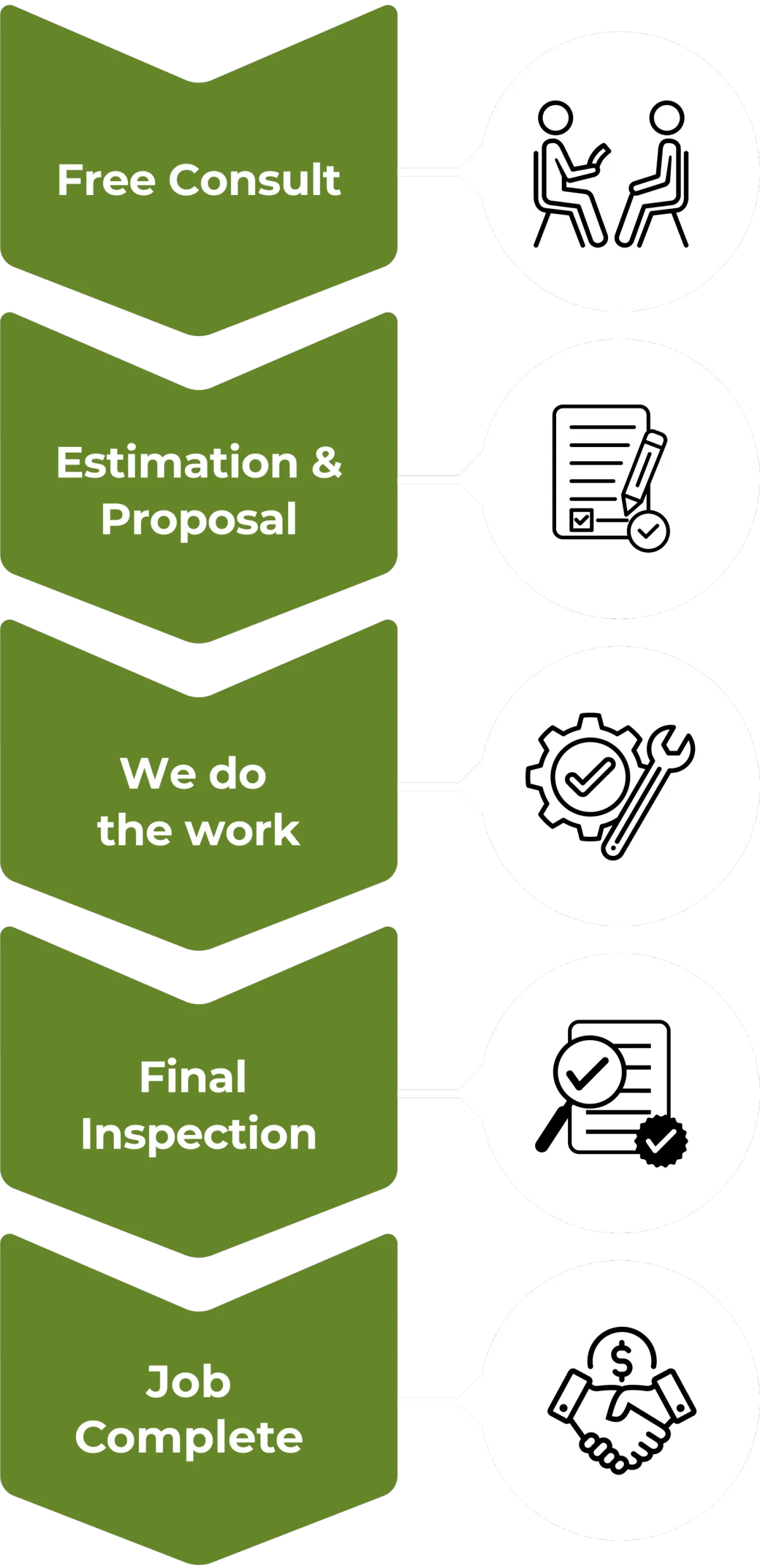
our process
Our process is simple and only contains a few simple steps

SERVICE AREAS
proudly serving Toowoomba
Toowoomba
Withcott
Helidon
Gatton
Highfields
Meringandan
Hampton
Lockyer Valley
Esk
Plainland

frequently asked questions
Find clear answers to the questions we’re asked most often.
How does the repair process work?
Once you contact Appliance Repair Solutions, a technician will discuss the issue with you and arrange a suitable inspection time. The problem is diagnosed on site, and clear advice is provided before any repair work begins. The goal is to complete repairs efficiently while keeping communication straightforward throughout the process.
How quickly can I book a technician?
Service availability depends on your location and the type of appliance issue. In many cases, same day or next day bookings may be available across Sydney. The team aims to respond promptly and provide flexible scheduling where possible.
Do you provide quotes before starting repairs?
Yes. After assessing the appliance and identifying the fault, you will receive clear information about the recommended repair and expected costs. This helps customers make informed decisions before approving any work.
What should I do before the technician arrives?
It helps to clear access around the appliance and make note of any error codes or unusual behaviour. If possible, have the appliance model number available as this can assist with diagnosing the issue faster. The technician will guide you through anything else needed when confirming the booking.
What should I do before the technician arrives?
It helps to clear access around the appliance and make note of any error codes or unusual behaviour. If possible, have the appliance model number available as this can assist with diagnosing the issue faster. The technician will guide you through anything else needed when confirming the booking.
proudly serving Baulkham Hills
Homebush
Gladesville
Leichhardt
North Sydney
Mosman
Box Hill
Marsden park

Trusted & Accredited Plumbers


READY TO take the next step?
get a free quote TODAY!
Alan’s Fencing and Handyman Service
103 Connoles Rd, Postman’s Ridge, QLD 4352
