BLOG
What Toowoomba Property Owners Should Check When an Existing Fence Starts Leaning, Moving or Deteriorating
A fence that starts leaning or moving rarely develops the problem without a cause. For Toowoomba property owners, the first visible sign may be a crooked panel, dragging gate or post that no longer sits vertically, but the actual problem can be below ground or elsewhere along the fence line.
Ageing materials are one possible cause. Ground movement, moisture, drainage, corrosion, damaged connections and extra loads placed on the fence can also contribute.
Identifying what has moved and why helps determine whether the problem is confined to one component or affects a larger section of fencing.
Check the Posts Before Blaming the Panels
Fence posts carry the loads from rails, panels and gates into the ground. When a post moves, everything attached to it can move as well.
Stand back and look along the complete fence line. If several panels lean in the same direction, check whether their supporting posts have shifted. At ground level, look for gaps opening around posts, disturbed soil or areas where water has washed soil away.
Timber posts also need inspection around the ground line. This area experiences repeated exposure to soil and moisture, and deterioration can weaken a post even when the upper section still looks reasonable.
Metal posts can develop different problems. Look for corrosion, movement at the base, damaged connections and distortion.
Pushing gently against the fence can sometimes reveal movement, but avoid applying force to a badly deteriorated structure. A post that moves independently of the surrounding ground needs closer attention.
A Gate That Starts Dragging Can Reveal Fence Movement
Gates often show alignment problems before the rest of the fence looks noticeably crooked.
Unlike an ordinary fence panel, a gate places its weight on hinges attached to one side. The supporting post needs to resist that load while the gate repeatedly opens and closes.
If a gate that previously worked correctly starts scraping along the ground, missing its latch or developing an uneven gap, check more than the gate itself.
Look at the hinge post from different angles. A small amount of post movement can create a much larger change at the opposite edge of the gate. Loose hinges, damaged welds, deteriorated timber and movement around the post footing can produce similar symptoms.
Adjusting the latch may make the gate close again, but that does not correct an unstable post. If the gate continues dropping after adjustment, the supporting structure deserves attention.
Look for Water, Erosion and Changing Ground Levels
Fence problems can originate in the ground rather than in the fence materials.
Inspect the area after rain if possible. Water flowing along a fence line can remove soil from around posts. Low sections may remain saturated while the rest of the property dries.
Downpipes, drainage outlets and changes made to neighbouring landscaping can also alter how water moves through an area.
Sloping blocks require particular attention because runoff can become concentrated as it moves downhill. Soil disappearing from the lower side of a post can gradually reduce its support.
Also check whether landscaping has changed since the fence was built. Added garden beds, excavation, retaining work or changes in surface levels can alter the conditions surrounding existing posts.
Where a retaining wall sits close to the fence, treat the two structures separately when inspecting the problem. Queensland's dividing fence framework does not generally classify retaining walls as fences because their purpose is to support built-up or excavated earth.
Inspect Rails, Fixings and Individual Fence Components
Not every leaning section comes from a failed post. The connections between fence components can also deteriorate.
On timber fencing, look for split rails, loose boards, failed fixings and timber that has softened or broken around connection points. One damaged rail may allow palings to move even though the posts remain stable.
Metal fencing should be checked for corrosion around joins, loose fasteners, bent components and separated welds. Pay particular attention to areas where different materials meet because water can remain trapped around some connections.
Vegetation can hide deterioration. Thick vines and shrubs growing through a fence can make inspection difficult and may place additional loads on sections that were not designed to support them.
Items attached to a dividing fence can create another issue. Queensland guidance states that adjoining owners generally share responsibility for maintaining a dividing fence and that neither neighbour should attach items that could damage or alter it without agreement.
Decide Whether the Problem Is Localised or Widespread
The number of affected components provides useful information when deciding what needs attention.
One damaged paling, loose fastener or isolated rail may represent a local repair. A single failed post may also be repairable if the surrounding fence remains in sound condition.
The situation changes when multiple posts lean, timber deterioration appears throughout the fence, corrosion affects numerous connections or several sections have moved out of alignment. Repairing one visible problem at a time may make little sense if the fence is deteriorating more broadly.
The fence's purpose also matters. A boundary fence, livestock fence and pool barrier do not carry the same consequences when damaged. Pool barriers have specific safety requirements and should not be treated as ordinary boundary fencing when a defect could create access to the pool area.
For a shared boundary fence, ownership and repair responsibilities should also be considered before work begins. In Queensland, a dividing fence built on the common boundary is generally owned equally by adjoining neighbours, and fencing work includes repair and maintenance.
A leaning fence is therefore best assessed as a complete structure. Checking posts, gates, drainage, ground movement, rails, fixings and the surrounding property can reveal whether the visible lean is the problem itself or simply the first sign of something happening elsewhere.
DISCOVER WHAT OUR CUSTOMERS HAVE TO SAY ABOUT US
REVIEWS
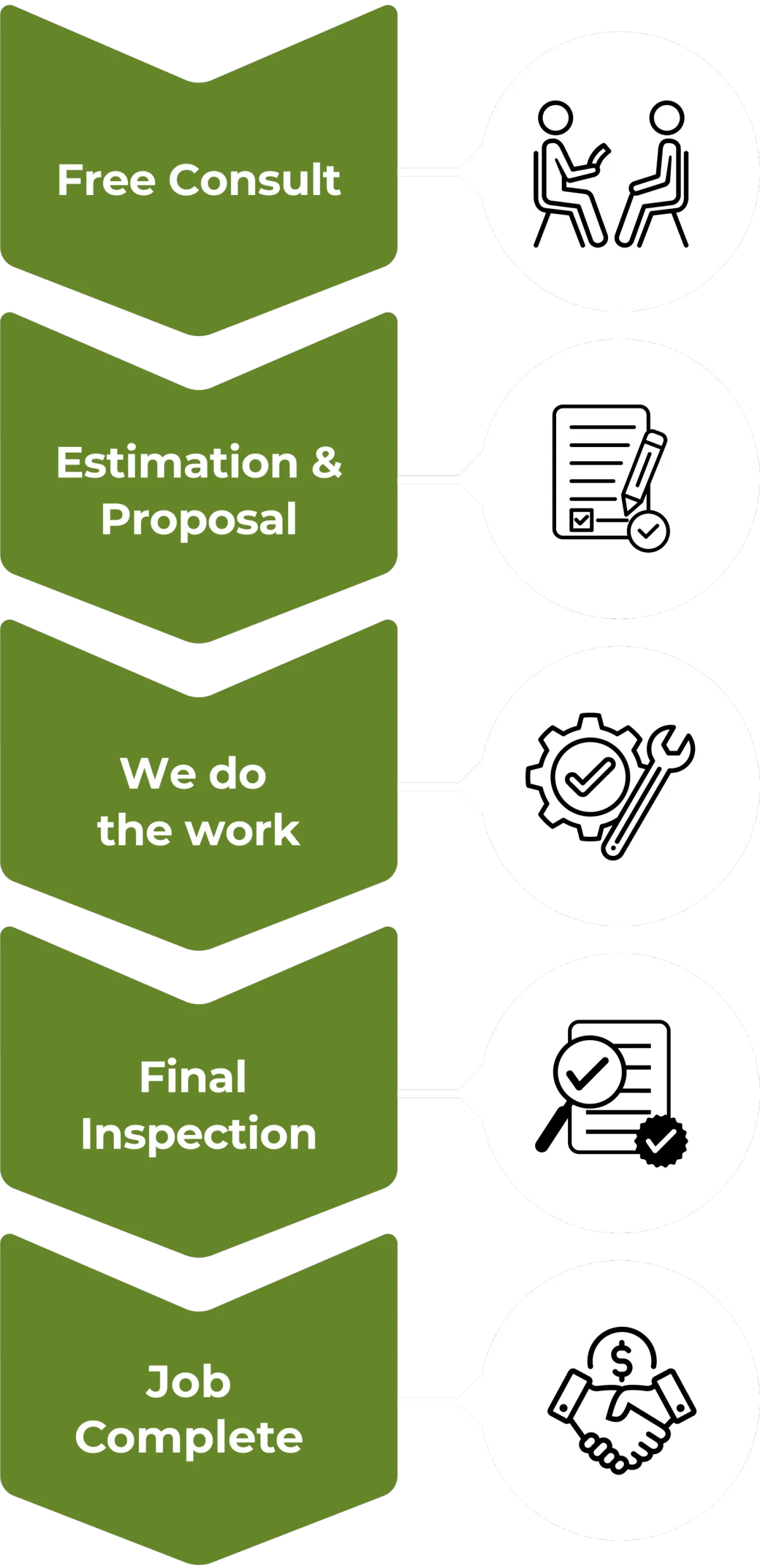
our process
Our process is simple and only contains a few simple steps

SERVICE AREAS
proudly serving Toowoomba
Toowoomba
Withcott
Helidon
Gatton
Highfields
Meringandan
Hampton
Lockyer Valley
Esk
Plainland

frequently asked questions
Find clear answers to the questions we’re asked most often.
How does the repair process work?
Once you contact Appliance Repair Solutions, a technician will discuss the issue with you and arrange a suitable inspection time. The problem is diagnosed on site, and clear advice is provided before any repair work begins. The goal is to complete repairs efficiently while keeping communication straightforward throughout the process.
How quickly can I book a technician?
Service availability depends on your location and the type of appliance issue. In many cases, same day or next day bookings may be available across Sydney. The team aims to respond promptly and provide flexible scheduling where possible.
Do you provide quotes before starting repairs?
Yes. After assessing the appliance and identifying the fault, you will receive clear information about the recommended repair and expected costs. This helps customers make informed decisions before approving any work.
What should I do before the technician arrives?
It helps to clear access around the appliance and make note of any error codes or unusual behaviour. If possible, have the appliance model number available as this can assist with diagnosing the issue faster. The technician will guide you through anything else needed when confirming the booking.
What should I do before the technician arrives?
It helps to clear access around the appliance and make note of any error codes or unusual behaviour. If possible, have the appliance model number available as this can assist with diagnosing the issue faster. The technician will guide you through anything else needed when confirming the booking.
proudly serving Baulkham Hills
Homebush
Gladesville
Leichhardt
North Sydney
Mosman
Box Hill
Marsden park

Trusted & Accredited Plumbers


READY TO take the next step?
get a free quote TODAY!
Alan’s Fencing and Handyman Service
103 Connoles Rd, Postman’s Ridge, QLD 4352
