BLOG
Pool Fencing in Toowoomba: Understanding Barrier Heights, Gates, Non-Climbable Zones and Queensland Safety Requirements
Pool fencing around a Toowoomba home is a regulated safety barrier, not simply another type of boundary fencing. Queensland has one pool safety standard, MP 3.4 Swimming Pool Barriers, which applies to new and existing regulated pools. The standard covers fence dimensions, gates, non-climbable areas, access and signage.
A barrier that originally complied can also develop problems later. Changes to ground levels, vegetation, outdoor furniture, gates and adjoining structures can affect whether children can gain access to the pool area.
Understanding the main requirements makes it easier for property owners to identify obvious problems before they become safety concerns.
Pool Fence Height Is Measured From the Ground
A pool fence generally needs to be at least 1200 mm high. The measurement runs from finished ground level to the top of the barrier, and the maximum gap between the ground and bottom of the barrier is 100 mm. These measurements also apply on sloping and stepped sites.
Ground levels therefore matter more than many homeowners realise. Adding soil, mulch or a raised garden bed beside an existing fence can effectively reduce its compliant height even though nothing about the fence itself has changed.
Loose material beneath the fence can cause another problem. QBCC advises that the surface underneath should be stable and solid because material such as sand or garden mulch can be moved, potentially creating a gap greater than 100 mm underneath the barrier.
Toowoomba properties with sloping yards require particular care when checking height.
Measuring only at the highest or easiest point is not enough. The minimum height needs to be maintained along the barrier.
Pool Gates Must Close and Latch Without Assistance
A gate is one of the most frequently used moving parts of a pool barrier, making its operation a common point of failure.
Queensland identifies gates that fail to self-close and self-latch from all positions as one of the common reasons pool barriers fail. Hinges, latches and gate alignment therefore need ongoing attention.
A gate should not need to be pushed shut after someone walks through it. If it remains partly open, drags on the ground or reaches the closed position without engaging the latch, the barrier needs attention.
Gate problems can develop gradually. Posts can move, hinges can loosen and components can wear through repeated use. A gate that worked correctly when installed should not be assumed to remain compliant indefinitely.
Propping a pool gate open also defeats the purpose of the barrier. The gate needs to remain closed when the pool area is not being accessed.
Non-Climbable Zones Include the Area Around the Fence
Pool barrier compliance does not stop at the fence itself. Objects surrounding the barrier can provide footholds or platforms that make it easier for a child to climb over.
Queensland's standard uses continuous 900 mm non-climbable zones. For pool fences below 1800 mm, QBCC guidance also requires clearance immediately inside the fence. Climbable objects generally need to remain at least 900 mm from the outside and 300 mm from the inside.
Potential climbing points include outdoor furniture, barbecues, pot plants, raised garden beds, steps, trees, shrubs, air-conditioning units, taps, deck edges and toys such as trampolines.
Vegetation deserves regular attention because it changes over time. A branch that was clear of the fence when landscaping was completed can eventually grow into the non-climbable zone.
This is one reason pool barrier checks should include the surrounding yard rather than concentrating only on damaged panels.
Boundary Fences Can Form Part of a Pool Barrier
Some Toowoomba properties use a dividing fence as part of the pool enclosure. This is possible, but the relevant section still needs to satisfy pool safety requirements.
A boundary fence used as a pool barrier may need modification if horizontal rails, adjoining fences or nearby objects create climbing opportunities. In some circumstances, a fence at least 1800 mm high can use an internal 900 mm non-climbable zone measured down from the top.
Shared fencing also introduces responsibilities involving the neighbouring property. Queensland guidance states that both neighbours have responsibilities for maintaining a dividing fence that also serves as a pool barrier.
Property owners planning to build, replace or modify a shared fence for pool safety purposes should therefore check the specific requirements before starting work.
Regular Checks Matter After the Fence Is Installed
Pool owners are responsible for keeping their barriers compliant and repairing damage promptly. A useful inspection should cover the complete barrier, not just the gate.
Check fence height where soil or garden levels have changed. Look beneath the barrier for excessive gaps. Remove climbable objects and trim vegetation around non-climbable zones. Test the gate from different open positions to confirm that it closes and latches without assistance.
Posts, panels and connections should also remain secure. Glass panels can move when ground or foundations shift, potentially reducing barrier height or creating other defects.
A compliant CPR sign is another requirement for regulated pools. It must be conspicuous and easily visible near the pool, measure at least 300 mm by 300 mm, and be made from durable, weatherproof material.
Pool fencing is therefore an ongoing property responsibility rather than a one-time installation. Fence dimensions, gate operation, ground levels and everything positioned around the barrier can affect whether a Toowoomba pool area continues to meet Queensland's safety requirements.
DISCOVER WHAT OUR CUSTOMERS HAVE TO SAY ABOUT US
REVIEWS
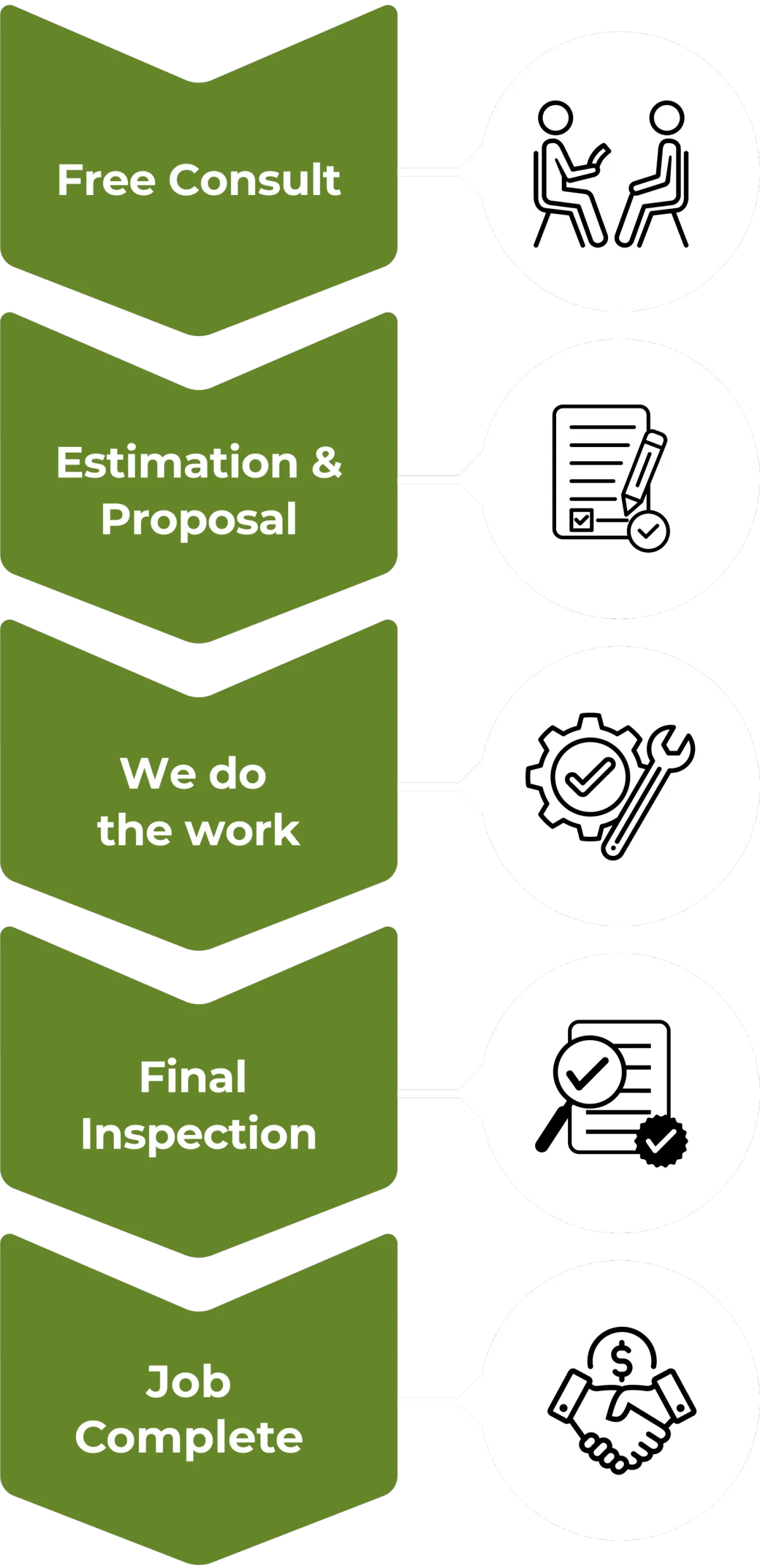
our process
Our process is simple and only contains a few simple steps

SERVICE AREAS
proudly serving Toowoomba
Toowoomba
Withcott
Helidon
Gatton
Highfields
Meringandan
Hampton
Lockyer Valley
Esk
Plainland

frequently asked questions
Find clear answers to the questions we’re asked most often.
How does the repair process work?
Once you contact Appliance Repair Solutions, a technician will discuss the issue with you and arrange a suitable inspection time. The problem is diagnosed on site, and clear advice is provided before any repair work begins. The goal is to complete repairs efficiently while keeping communication straightforward throughout the process.
How quickly can I book a technician?
Service availability depends on your location and the type of appliance issue. In many cases, same day or next day bookings may be available across Sydney. The team aims to respond promptly and provide flexible scheduling where possible.
Do you provide quotes before starting repairs?
Yes. After assessing the appliance and identifying the fault, you will receive clear information about the recommended repair and expected costs. This helps customers make informed decisions before approving any work.
What should I do before the technician arrives?
It helps to clear access around the appliance and make note of any error codes or unusual behaviour. If possible, have the appliance model number available as this can assist with diagnosing the issue faster. The technician will guide you through anything else needed when confirming the booking.
What should I do before the technician arrives?
It helps to clear access around the appliance and make note of any error codes or unusual behaviour. If possible, have the appliance model number available as this can assist with diagnosing the issue faster. The technician will guide you through anything else needed when confirming the booking.
proudly serving Baulkham Hills
Homebush
Gladesville
Leichhardt
North Sydney
Mosman
Box Hill
Marsden park

Trusted & Accredited Plumbers


READY TO take the next step?
get a free quote TODAY!
Alan’s Fencing and Handyman Service
103 Connoles Rd, Postman’s Ridge, QLD 4352
